
« The oaks there have trunks as straight as mountain fir trees, and the immense beech grove stretches as far as the eye can see like an ocean of greenery ».
Charles Guyot, directeur de l’école forestière de Nancy, 1887
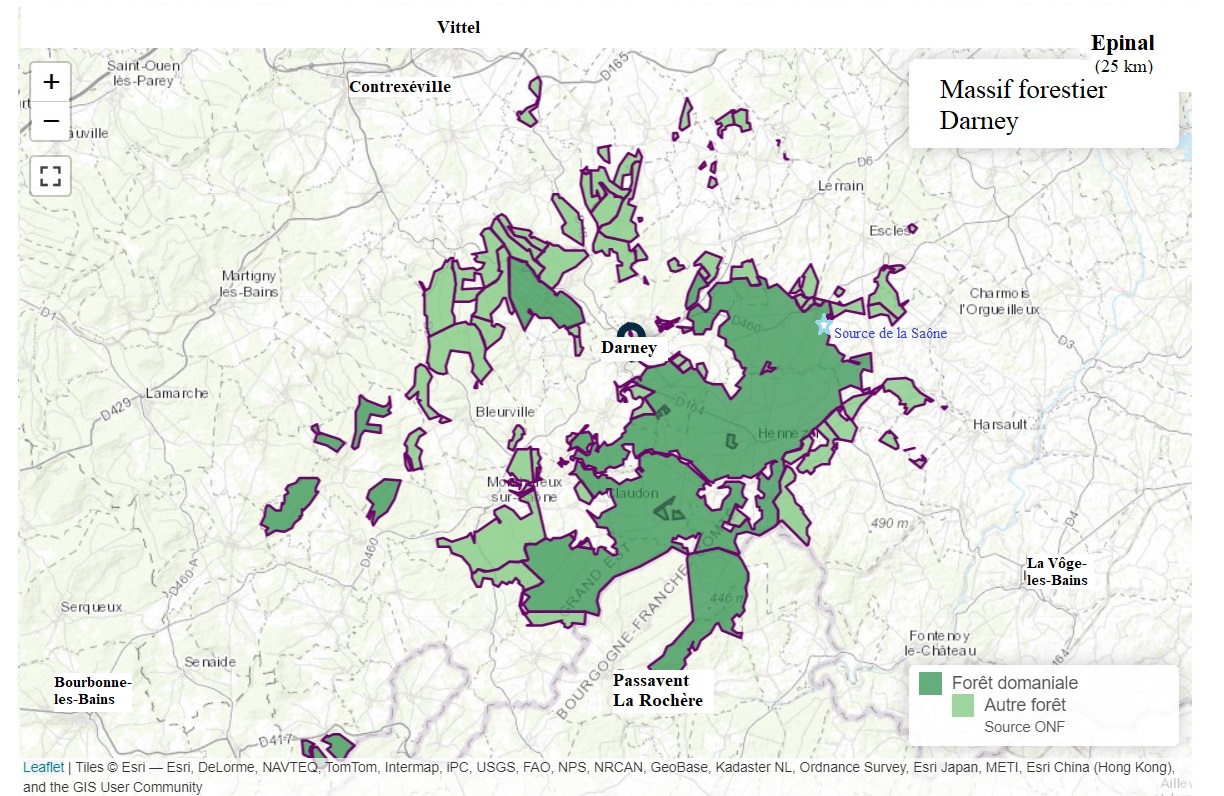
To locate yourself

- 15,000 hectares in the Vosges plain about thirty km west of Epinal
- 35 communes in the Vosges around Darney and Monthureux-sur-Saône (and Vioménil, Source of the Saône)
- 1 municipality in Haute-Saône (Passavent-La Rochère)
- In the center of the Thermal Route including the spa centres at Contrexéville, Vittel, Martigny-les-Bains, La Vôge-les-Bains, Plombières-les-Bains, Bourbonne-les-Bains and, further south, Luxeuil-les-Bains.
The Territory of Master Glassmakers
The economic attractions of the region are not new. From the end of the Middle Ages, the Dukes of Lorraine understood the advantages of their vast Forest of Darney in order to “develop the territory”. Glass was recognised as a product with great potential but very demanding in terms of raw materials. Resources in abundance in the forest included: sand (produced by the erosion of sandstone); wood to fuel the ovens; ferns to absorb potash from the earth and lower the melting temperature of glass… and water, water in abundance.
The dukes made use of these natural assets and a sort of “tax advantage” with families of Bohemian glassmakers. In 1448, a charter raised them to the rank of “gentleman glassmakers”. Their activities continued to develop until the 17th century with nearly 30 glassworks in the region.

The creation of the La Rochère glassworks in Passavent-la-Rochère and the Château of Lichecourt (located on the edge of the forest between Relanges and Darney) can be traced back to this period.

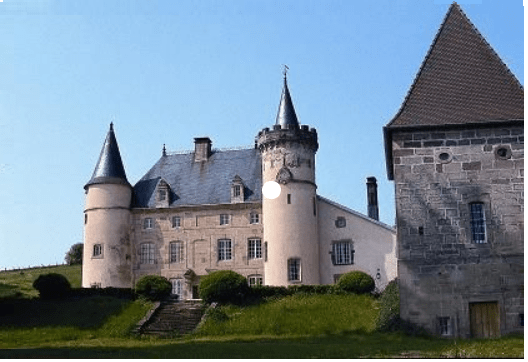
Château of Lichecourt,
in the Darney forest, home of the gentleman glassmaker who founded the La Rochère glassworks.
The Lake of Chanau
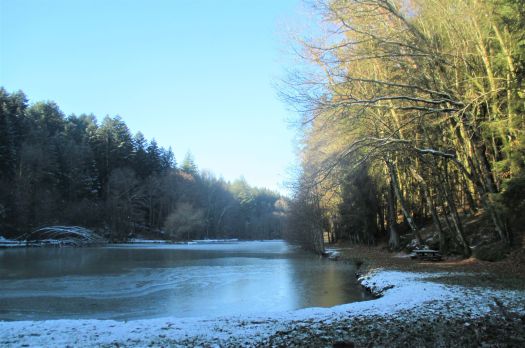
 Un jardin en forêt de Darney